
Saturday, August 12, 2023

Saturday, March 4, 2023
Buddhism in Sri Lanka
The Theravada tradition of Buddhism, which emphasizes the original teachings of the Buddha, has remained the dominant form of Buddhism in Sri Lanka.
Buddhism was introduced to Sri Lanka in the 3rd century BCE during the reign of King Devanampiya Tissa. The introduction is attributed to Arahat Mahinda, the son of the Indian Emperor Ashoka. He brought the Theravada form of Buddhism to the island, which became the dominant tradition. Buddhism has deeply influenced Sri Lankan culture, influencing art, literature, architecture, and daily practices. Festivals, rituals, and traditions are often tied to Buddhist teachings and stories.
Thursday, December 29, 2022
Tuesday, December 13, 2022
Wednesday, October 19, 2022
Knuckles is one the
most important bio-diversity environments with a range of mountains and a great
water and wildlife resources. The Knuckles National Heritage and Wilderness
Area or the Knuckles Mountain Range is a mountain range that covers an area of
155 sq km. The forest contains five major
Loved by travelers
for its beauty Knuckles mountains has become a hot spot in eco-tourism in
Sunday, October 16, 2022
and anxious moments
because of its difficulty in getting to the top, but the climb is worth your
effort
because it will take you through some
beautiful scenery that you won't forget. One will come across
beautiful small waterfalls because many
waterfalls begin from this mountain.
Monday, October 10, 2022
There is no island in the world., Great Britain itself not excepted., that has attracted the attention of authors in so many distant ages and so many different countries as Ceylon. There is no nation in ancient or modern times possessed of a language and literature, the writers of which have not at some time made it their theme. Its aspect, its religion, its antiquities, and productions, have been described as well by the classic Greeks, as by those of the Lower Empire; by the Romans; by the writers of China, Burmah, India, and Kashmir; by the geographers of Arabia and Persia; by the medieval voyagers of Italy and France; by the annalists of Portugal and Spain; by the merchant adventurers of Holland, and by the travellers and topographers of Great Britain. ………..
Copied by reference of Ceylon – an account of the Island physical, historical and topographical (1859)
by James E. Tennent


Tuesday, October 4, 2022
Sunday, October 2, 2022
Sunday, May 1, 2022
Ancient Reservoirs and Irrigation Systems of Sri Lanka

Irrigation systems of ancient Sri Lanka consist of a large number of village reservoirs to gigantic reservoirs.
In Sri Lanka, there are over 30,000 reservoirs, the majority of which date from the third century BC to the 12th century.
In the third century BC, Abaya Wewa was the first large reservoir to be constructed in recorded history. Since that time, Sri Lankan tank builders have developed a remarkable skill for managing big bodies of water, enabling them to construct enormous reservoirs that no other civilization could have imagined.
As stated in H. Parker;s book "Ancient Ceylon.", an irrigation engineer who was in charge of rebuilding several historic irrigation reservoirs in the late 1800s, Europeans didn't begin using the valve pits in their reservoirs until the middle of the 18th century.
but Sri Lankan irrigation experts inventioned the "Biso Kotuwa" valve pit, which could easily control the outflow of very big water bodies, in the third century BC that inspired Sri Lankan irrigation experts to construct such enormous reservoirs.
The incredible instrumentation precision of the old irrigation systems is another advancement.
The ancient irrigation engineers first discovered that the Kala Wewa in Pollonaruwa was created on a little raised ground compared to Tissa Wewa in Anuradhapura when king Dathusena (459-477 AD) built Yodha Ela, also known as Jayaganga. Then, in order to transport extra water from the Kala Wewa to the Tissa Wewa, he constructed the 54-mile (87-kilometer) Yoda Ela, which has a gradient of 6–12 inches per mile (about 10–20 cm per kilometer).
Experts are still perplexed as to how these engineers were able to reach such precision.
Sunday, February 27, 2022
Sri Lanka Dive Sites
Over 100
Sri Lanka Dive Sites are related to historical shipwrecks in Sri Lankan waters.
They are scattered around the country, and there may be many unknown historical
shipwrecks around the country. Most of the identified historical shipwrecks
belong to the colonial period, and the oldest shipwreck site identified is the
2000-year-old Godawaya Shipwreck Site, the oldest shipwreck site in the
Asia-Pacific Region. Most of the identified shipwreck sites were in service
from 1850 to 1950. The deepest known shipwreck lies 65-67 meters under the sea.

Sunday, December 26, 2021
A popular motif in the visual and literary arts - Butterfly
There are over 245 species of butterflies in Sri Lanka and of which 25 of them are endemic to the island.
The largest Sri Lankan butterfly which has glossy black and bright yellow colors with attractive pattern, was categorized as flagship species due to its wide distribution.

Tuesday, December 14, 2021
World’s biggest blue sapphire ‘Queen of Asia’ found in Sri Lanka

A 310kg heavy natural corundum blue sapphire
A gem company in Sri Lanka has unveiled a rare and massive gemstone weighing 310kg's that has been certified as one of the biggest corundums ever found in the country.
The rare gem stone had been found three months ago from a gem pit in Ratnapura, popularly known as gem city situated around 85 km away from capital Colombo.
Monday, November 8, 2021
Wednesday, October 7, 2020
Monday, December 23, 2019
Aukana statue - The tallest ancient Buddha statue in Sri Lanka

According to legend, this magnificent standing Aukana Buddha was sculpted during the reign of Dhatusena in the 5th century, though some sources date it to the 12th or 13th century.
The artist of this magnificent work of art is still unknown.
A unique feature is that the statue has been carved out of a great granite rock face and appears to stand alone, but is in fact connected by a narrow strip of rock which also supports the statue. The Buddha image stands on a Lotus flower pedestal which has been carved separately and placed under the statue.
The robe is worn tightly, clearly outlining the shape of the body, and its pleats are carved clearly and delicately.
Aukana Buddha Statue is in { Asisa Mudra } the “posture of blessing” .
Aukana Buddha Statue is carved alone in the proportion of nine faces: the body height is nine times the length of the face. The proportion of nine faces is the iconometry followed by the sculptors in the eighth century AC of Sri Lanka.
Friday, March 29, 2019

Wednesday, May 2, 2018
Mihintale - The birthplace of Buddhism in Sri Lanka.

Historically recorded as the birthplace of Buddhism in Sri Lanka, Mihintale is believed to be the meeting place of the Buddhist monk Mahinda, son of Emperor Ashoka of India, and King Devanampiyatissa in the 3rd century BC.
This meeting was the beginning of Buddhism in Sri Lanka, which quickly became a core part of Sinhalese culture.
Saturday, February 17, 2018
The traditional costume of Sri Lanka
Sri Lankan traditional dress for women is Saree and like other South Asia countries, sarongs are also the basic attire for men in Sri Lanka.

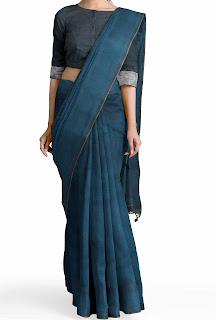
Sri Lankan traditional dress was affected by both Asian and European cultures. Traditional Sri Lankan attires have many other features like appearance, decoration, color which changed over time.
Friday, January 19, 2018
Sri Lankan Authentic food
Since Sri Lanka is a multi cultural country, nothing anything less influence when it comes to Sri Lankan food .

Sri Lanka is filled with its regional flavours while the cuisine is known for a rich combination of rice specialities, spices, herbs, seafood, seasonal vegetables and fruits and of course, legumes.
Many of these dishes are centred around the main staple rice, rice flour and coconut. The curries have immense flavour and colours which are derived from a list of Sri Lankan Hot Spices. These spices not only add great flavour to the food but also adds ayurvedic value to the dish.
Subscribe to:
Posts (Atom)